About David Bernard
David Bernard's singular obsession is turning music into an experience that matters — for every musician in the rehearsal room and every person in the audience.
Every interpretive decision, every rehearsal technique, every innovation he has brought to the concert hall flows from one conviction: that music, when fully inhabited, is transformative. Not occasionally. Every time.
David Bernard transforms orchestras — and the communities they serve. He is Music Director of the Park Avenue Chamber Symphony, which he founded in 1999, the Massapequa Philharmonic, and the Eglevsky Ballet, and an active guest conductor with orchestras across the United States including the Brooklyn Symphony, Greenwich Symphony, Dubuque Symphony, Greater Newburgh Symphony, Island Symphony, South Shore Symphony, and ensembles from the Manhattan School of Music. As a conductor of ballet, Bernard has collaborated with dancers from the New York City Ballet, Boston Ballet, and Miami City Ballet, including Jared Angle, Tyler Angle, Santiago Castañeda, Ji Young Chae, Jeffrey Cirio, Sarah Gavilla, Miriam Miller, and Unity Phelan.
Bernard's conviction that an orchestra must be a living part of its community — not a concert hall institution apart from it — has defined his tenure as Music Director of the Massapequa Philharmonic, where the orchestra serves as Orchestra in Residence at the Tilles Center for the Performing Arts. Under his leadership the Massapequa Philharmonic has built deep partnerships with the Nassau County Museum of Art, the Eglevsky Ballet, the Long Island Choral Society, and the Massapequa Public Schools, and has developed one of Long Island's most adventurous concert series — spanning three centuries of orchestral repertoire alongside collaborations with the Indigo Girls and the Classical Mystery Tour Beatles Retrospective. It is this vision of music as a force for community transformation that led Long Island Weekly to call Bernard "the Johnny Appleseed of Classical Music."
Bernard's passion for the concert hall as a place of discovery extends to film music, which he approaches with the same interpretive seriousness as the great symphonic repertoire. His live-to-screen conducting includes Jaws in Concert before 1,300 people at Tilles Center and the world concert hall premiere of the Star Trek VI Overture — not performed live since the film's release in 1991 — reflecting a conviction that the line between cinema and the symphony was never as clear as we imagined.
Bernard's work has been recognized by the world's most respected musical institutions. He is Conductor of the Year and Platinum Prize winner of the European Classical Music Awards Grand Prix 2025, winner of the Master Prize of the UK International Conducting Competition, and a multiple First Prize winner of the Orchestral Conducting Competition of The American Prize. At the Saint-Saëns International Music Competition 2026, he received both the Grand Prize in Conducting and the Best Saint-Saëns Performance Special Award for his performance of the Symphony No. 3 with organist Paolo Bordignon and pianist Maxim Lando. A Voting Member of the GRAMMY Recording Academy, Bernard's recordings with the Park Avenue Chamber Symphony have been praised by Gramophone — where he is also a contributing writer — BBC Music Magazine, Fanfare, Stereophile, Pizzicato, MusicWeb International, and The Arts Desk, and reviewed on four continents. His Mahler Symphony No. 9 recording received the Clouzine International Music Awards' Best Classical Conductor, Global Music Awards Silver Medals in Symphony Music and Orchestra Performance, and LIT Music Awards Gold Medals in Best Orchestra and Best Conductor.
Bernard has presented world premieres of scores by Bruce Adolphe, Chris Caswell, John Mackey, Ted Rosenthal, and Jake Runestad, and has collaborated with Zlatomir Fung, Jeffrey Biegel, Carter Brey, Stanley Drucker, Whoopi Goldberg, Sirena Huang, Anthony McGill, Jon Manasse, Inbal Segev, and many others. As a scholar, he has developed new critical editions of Stravinsky's The Rite of Spring and The Firebird Suite with the Edwin F. Kalmus editorial team alongside Clinton F. Nieweg, retired principal librarian of the Philadelphia Orchestra, and has published editions of Mozart's Clarinet Concerto and Schumann's Symphony No. 2. He is inventor of US Patent No. 11,673,070 for the InsideOut Concert format. He teaches "Musicianship in Performance" — a seminar on interpretive decision-making in performance — at the Juilliard School, Meadowmount School of Music, and Long Island University. Bernard studied at the Curtis Institute of Music and the Juilliard School.
"Among the many instances that I've had the opportunity to perform the Dvořák Cello Concerto with orchestra, this experience was far and away both the most enriching and memorable. Mr. Bernard's knowledge, passion, and curiosity for the work far exceeded that of any conductor with whom I had previously worked on the piece. My experience leaves no doubt that Mr. Bernard is a musician, thinker, teacher, and communicator of the highest caliber."
— Zlatomir Fung, cellist Gold Medal, XVI International Tchaikovsky Competition
Symphonic Experiences
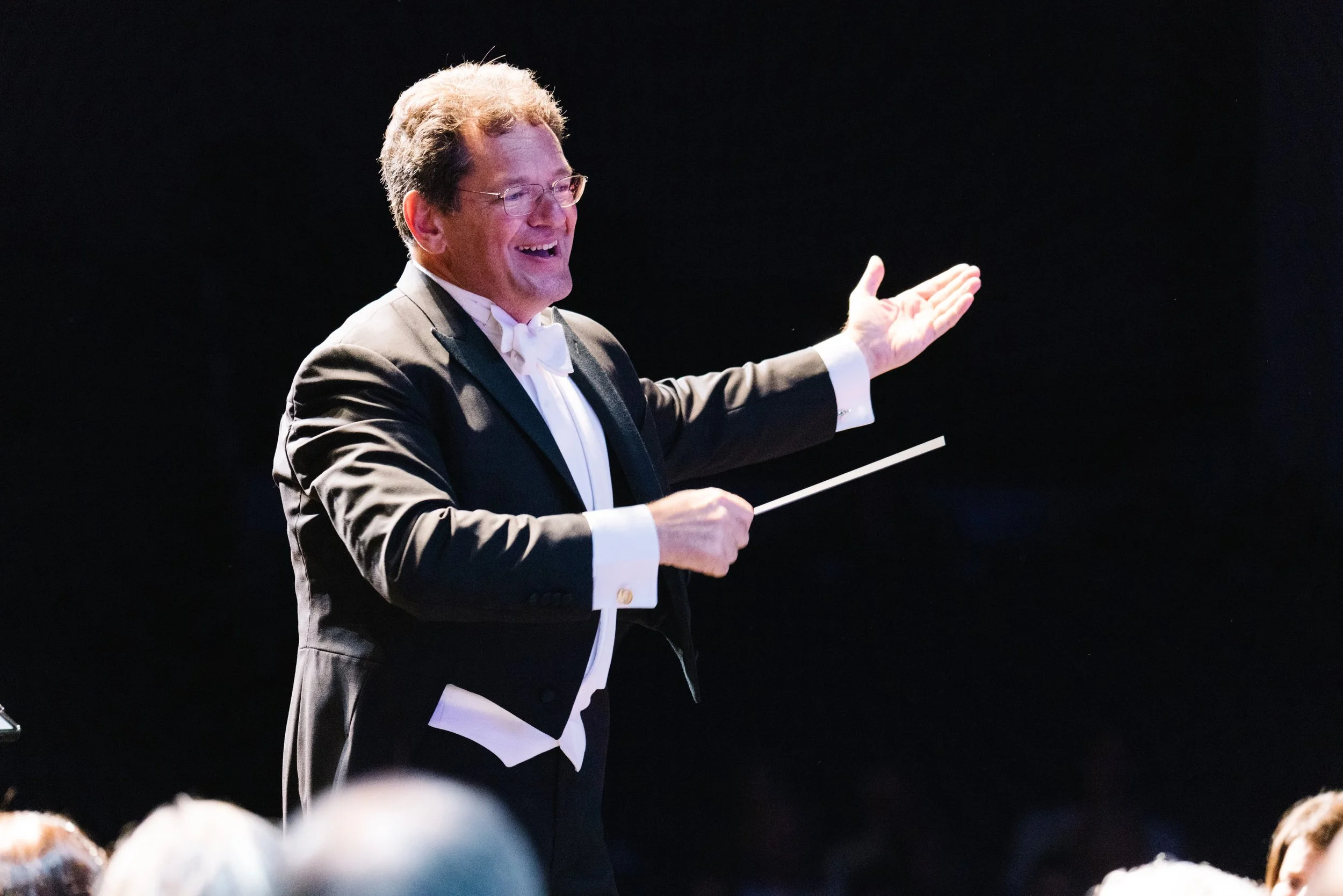
David Bernard builds orchestras into the cultural fabric of their communities.
Since 2016 he has transformed the Massapequa Philharmonic into what the Tilles Center calls a cultural leader on Long Island — sold-out concerts, a Tilles residency, and partnerships with the Nassau County Museum of Art, the Eglevsky Ballet, and the Massapequa Public Schools. At the Park Avenue Chamber Symphony, which he founded in 1999, the same vision has produced performances at Carnegie Hall and Lincoln Center and a recording catalog reviewed by Gramophone, BBC Music Magazine, and Fanfare.
Bernard's commitment to building authentic audiences through innovative approaches led him to invent and patent InsideOut Concerts — placing audiences physically inside the performing orchestra. WQXR called it "the most exciting and original concert-going experience the classical music audience has seen in a very long time."
"Remarkable skill and considerable elan... a considerable achievement by any standard." — The American Prize Competition Panel
Film Conducting
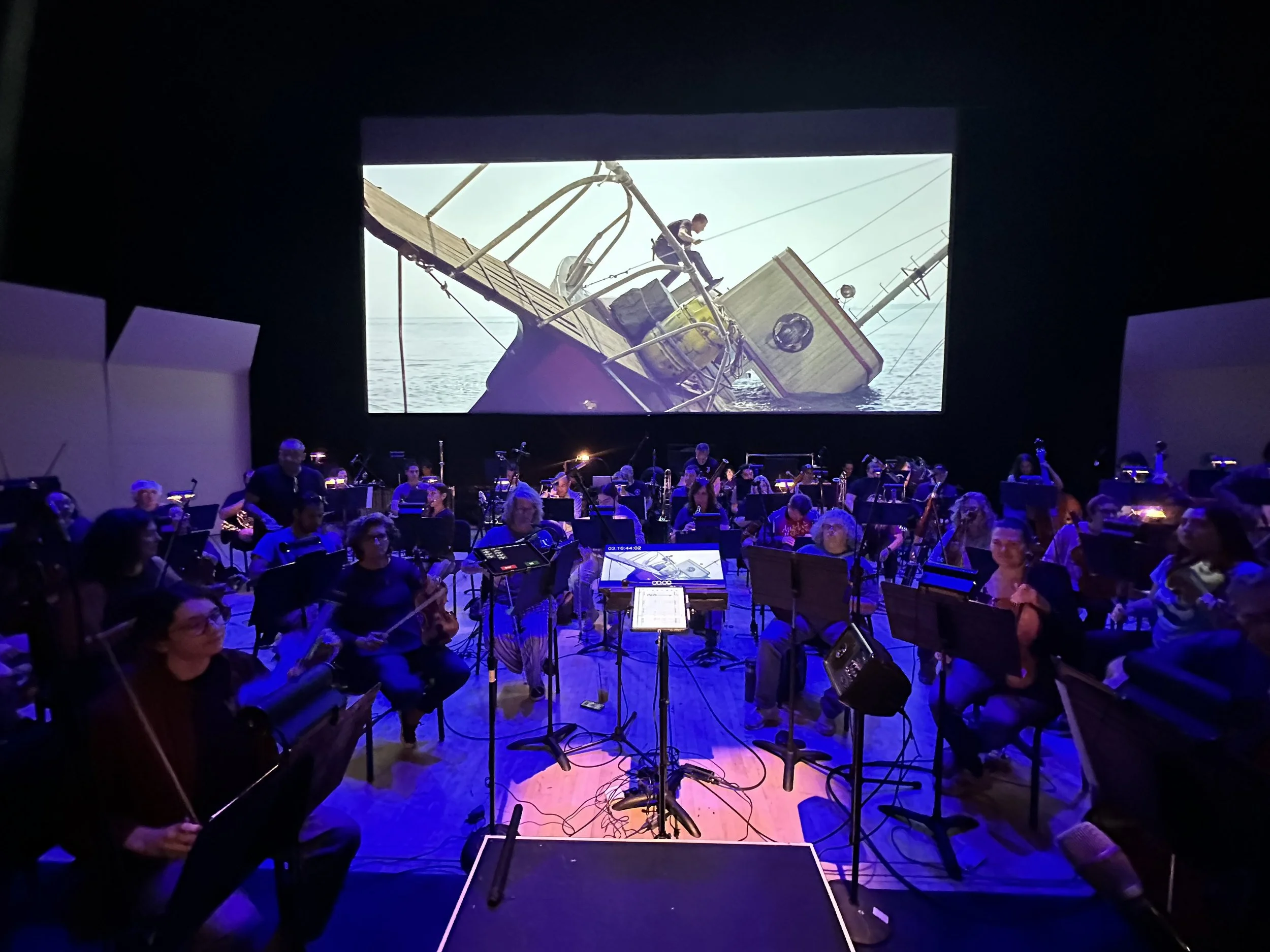
There is a moment in a film-with-orchestra concert when the audience realizes something has changed. The music they thought they knew — the score they've heard a hundred times through speakers — is suddenly alive in the room around them. That moment is what drives David Bernard's growing obsession with film conducting.
In the past year alone Bernard conducted the world concert premiere of the complete Star Trek VI score, led Jaws before 1,300 people at Tilles Center for the Performing Arts, and paired John Williams with Shostakovich in a program that revealed the deep symphonic roots of Hollywood's greatest film music. Each concert was not merely a screening with accompaniment — it was a symphonic event in its own right.
The film repertoire, approached with the same interpretive seriousness as Mahler or Beethoven, reveals something that concert audiences rarely get to experience: that the line between the concert hall and the cinema was never as clear as we imagined.
Individual Coaching, Group Seminars and Education
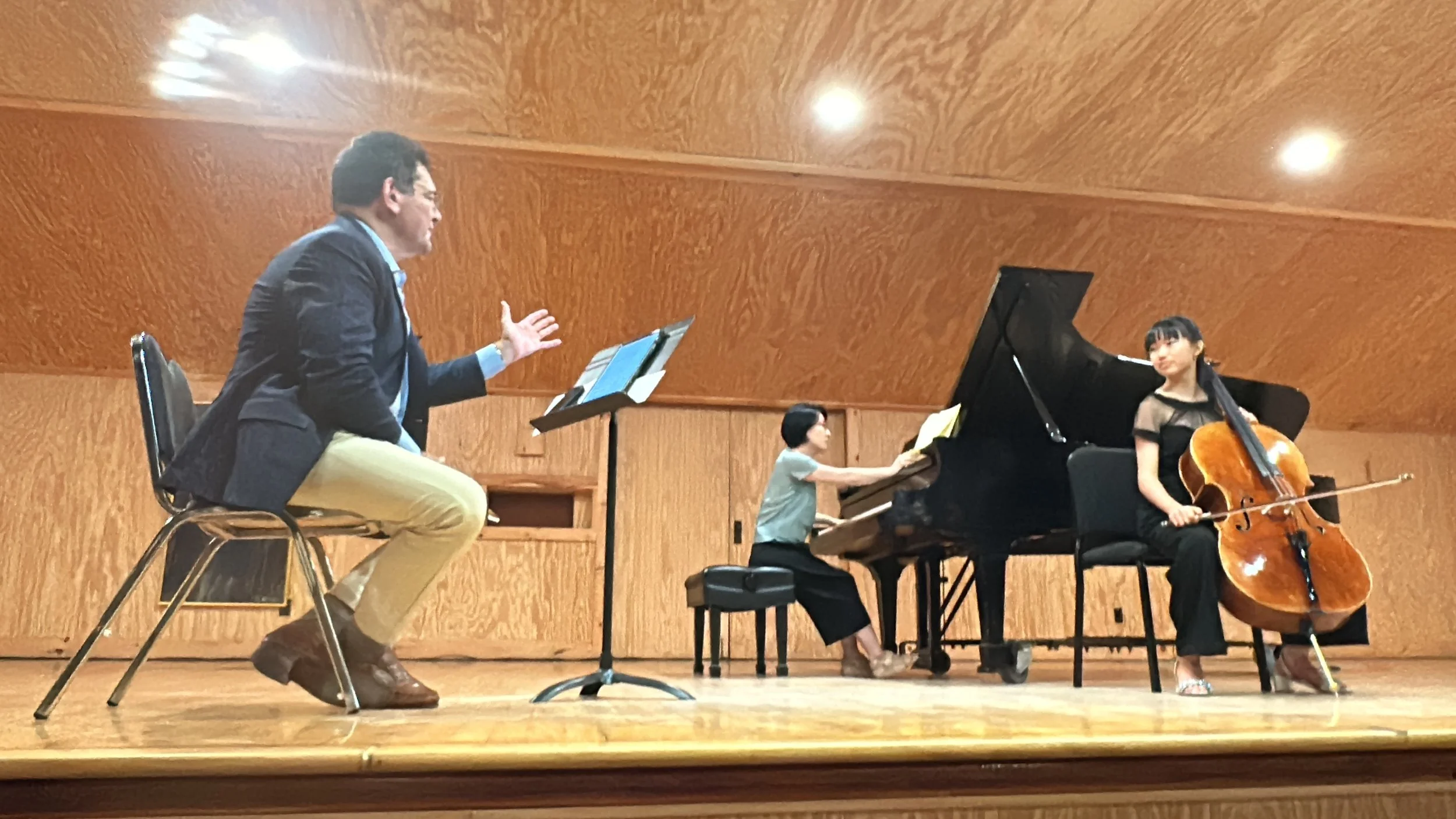
Every performance is the result of decisions. The question is whether those decisions are arbitrary — or purposeful, explainable, and grounded in the work itself.
David Bernard's teaching is built on a simple but transformative premise: that musicians have both the authority and the responsibility to make interpretive decisions that illuminate the music for the listener. To actively engage with the structure, style, and expressive potential of the work — and to make choices that allow the listener to fully experience it.
This is what genuine musicianship looks like. And it is a skill that can be taught, developed, and applied by any musician at any level.
Through individual coaching, seminars, and masterclasses, Bernard works with performers and conductors to develop a vocabulary for musical decision-making — one that transforms instinct into intention, and intention into performances that resonate. The goal is not to impose an interpretation. It is to free the musician to find one that is truly their own, and to defend it with confidence. Bernard has taught and presented at the Juilliard School, Meadowmount School of Music, and Long Island University.
Recordings & Scholarship

David Bernard's recordings with the Park Avenue Chamber Symphony on Recursive Classics have received critical acclaim from the publications that define the orchestral recording world — Gramophone, BBC Music Magazine, Fanfare, Stereophile, and The Arts Desk among them.
The catalog spans the core symphonic repertoire — Mahler, Beethoven, Tchaikovsky, Dvořák, Stravinsky, Brahms, Elgar, Barber, Copland, Bernstein — and has been praised on four continents for interpretations that bring fresh perspective to familiar works without sacrificing structural integrity or emotional truth.
Beyond the podium, Bernard has contributed to the scholarly record as a member of the Edwin F. Kalmus editorial team — working alongside Clinton F. Nieweg, retired principal librarian of the Philadelphia Orchestra — developing new critical editions of Stravinsky's The Rite of Spring and The Firebird Suite. He has also published his own editions of Mozart's Clarinet Concerto and Schumann's Symphony No. 2.