One Year, Three Concerts, One Obsession
It started with Holst.
This past June, I stood on the podium and performed The Planets with the Massapequa Philharmonic — the work that essentially invented the sound of space, and without which John Williams might never have found the musical language for Star Wars. We paired Holst with Williams that night, including the viscerally thrilling Duel of the Fates — one of Williams' most fantastic scores — and the World Concert Premiere of Cliff Eidelman's breathtaking Overture to Star Trek VI: The Undiscovered Country.
The backstory of that overture matters. Star Trek VI was conceived as the final chapter of the original series — a deliberate farewell — and director Nicholas Meyer wanted everything about it to feel different. No familiar marches, no franchise comfort food. He wanted music that would announce something larger and more serious than what had come before. Cliff Eidelman answered that call with a score of extraordinary symphonic ambition — an overture that opens with the dark, brooding weight of Stravinsky's Firebird, building through layers of orchestral complexity before culminating in the explosion of the Klingon moon Praxis. It is among the most underknown and underappreciated scores in the history of film music, and hearing it performed live in a concert hall for the first time, I understood exactly why it had haunted me since I first heard it in a movie theater in December of 1991.
What these scores share — beyond the DNA of the symphonic tradition running through both — is that they demand something specific from a conductor: the courage to let silence do the work.
Both Eidelman and Williams understood something profound: that an explosion is not just a sound effect. It is a musical event. It belongs to the score. It has to be built toward, released, and allowed to resonate — not alongside the music, but as part of it. Cliff Eidelman ends his Star Trek VI Overture with the explosion of the Klingon moon Praxis — and that explosion is the final "chord" of the piece. The orchestra builds, releases, and the silence that follows has to breathe with exactly the right weight. Hearing it live, performed for the first time in a concert hall, the connection between Eidelman, Williams, and the century of orchestral storytelling that preceded them both was not just audible. It was overwhelming.
Three months later, on September 14th, I faced the same moment in a different form.
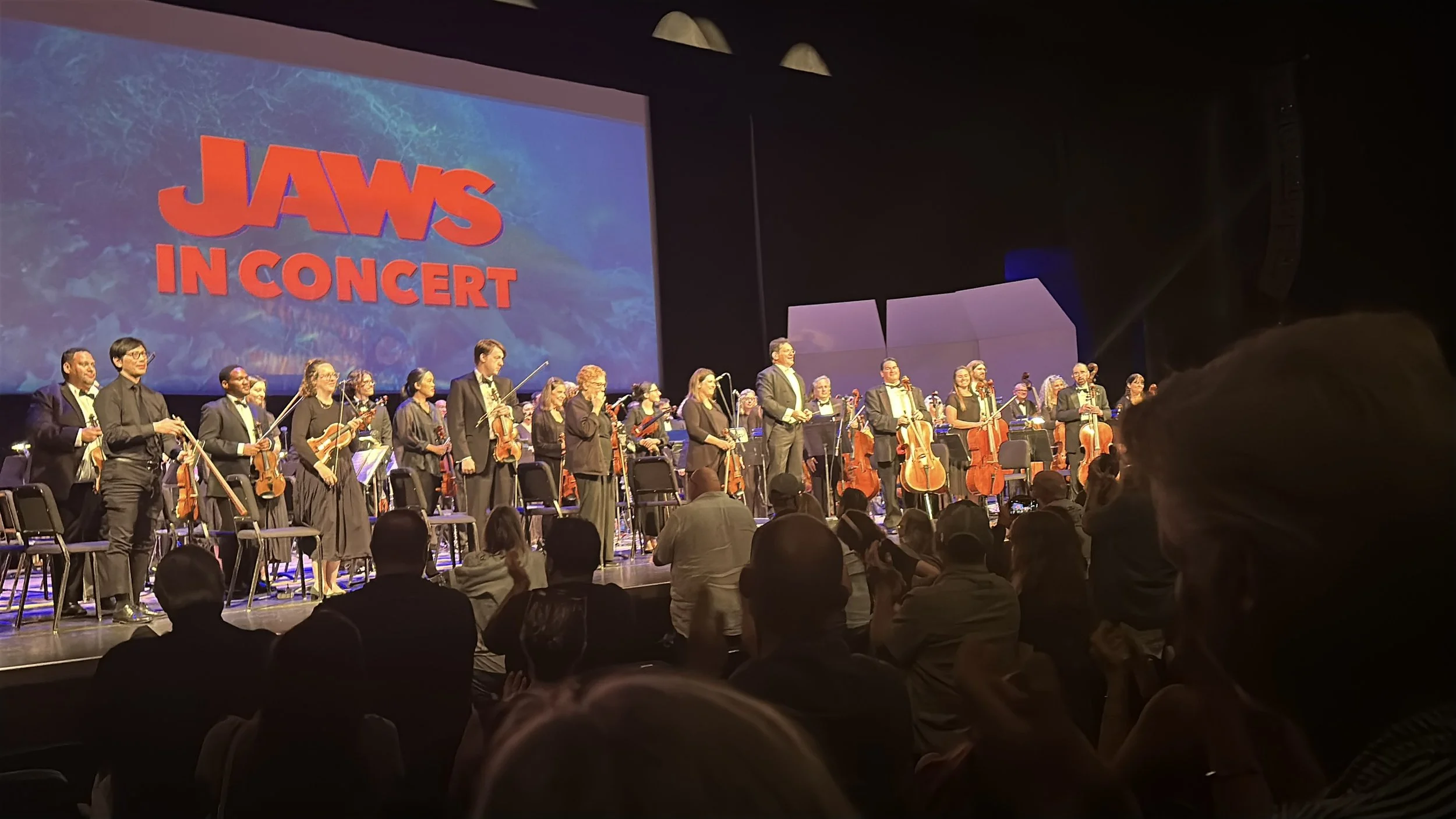
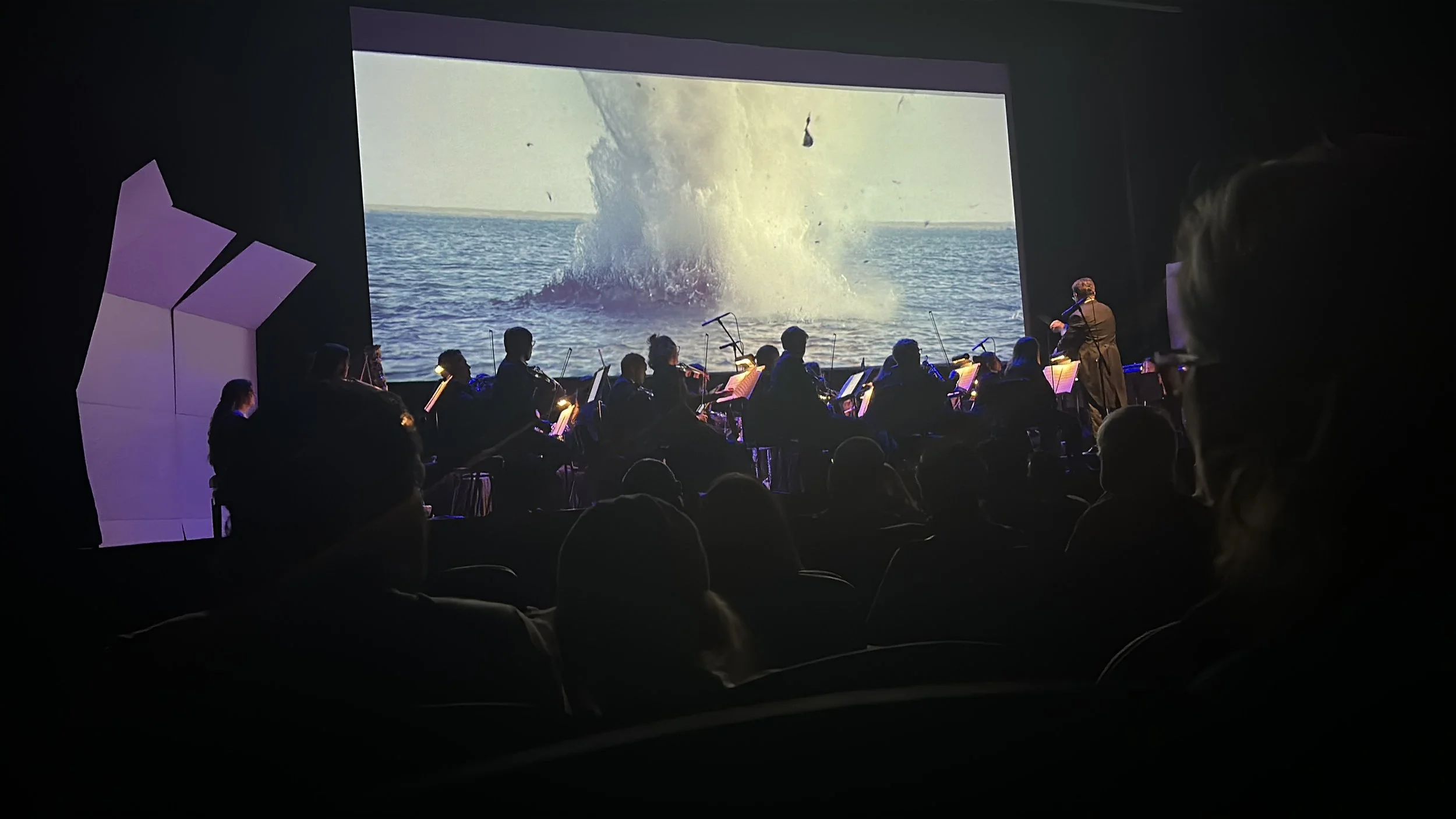
Jaws in Concert with the Massapequa Philharmonic at Tilles Center. 1,300 people. Two standing ovations. And at the climax of the film, the same artistic challenge: Williams writes a sudden silence into the score at the exact moment the shark explodes — the orchestra stops, the explosion fills the theater, and then the music surges back. That explosion, like Praxis before it, is not incidental to the score. It is the score — the culmination of everything Williams has been building toward from the first two-note pulse of the shark theme. The pacing of that silence is everything. I pushed the orchestra just a hair faster in the measures leading up to it, creating a fraction more space — and it landed with the full weight it deserved. The audience erupted.
Conducting the climactic shark explosion in Jaws in Concert with the Massapequa Philharmonic at Tilles Center for the Performing Arts, September 14, 2025.
This is what live-to-screen conducting actually is. Not a mechanical exercise of following click tracks and hitting marks — but the same artistic decision-making that happens in every great concert performance, now happening in real time while locked to a film. The score has to live and breathe as music even while tethered to the image. The orchestra has to feel free within the grid. That tension — between artistic expression and perfect synchronization — is where the real conducting happens.
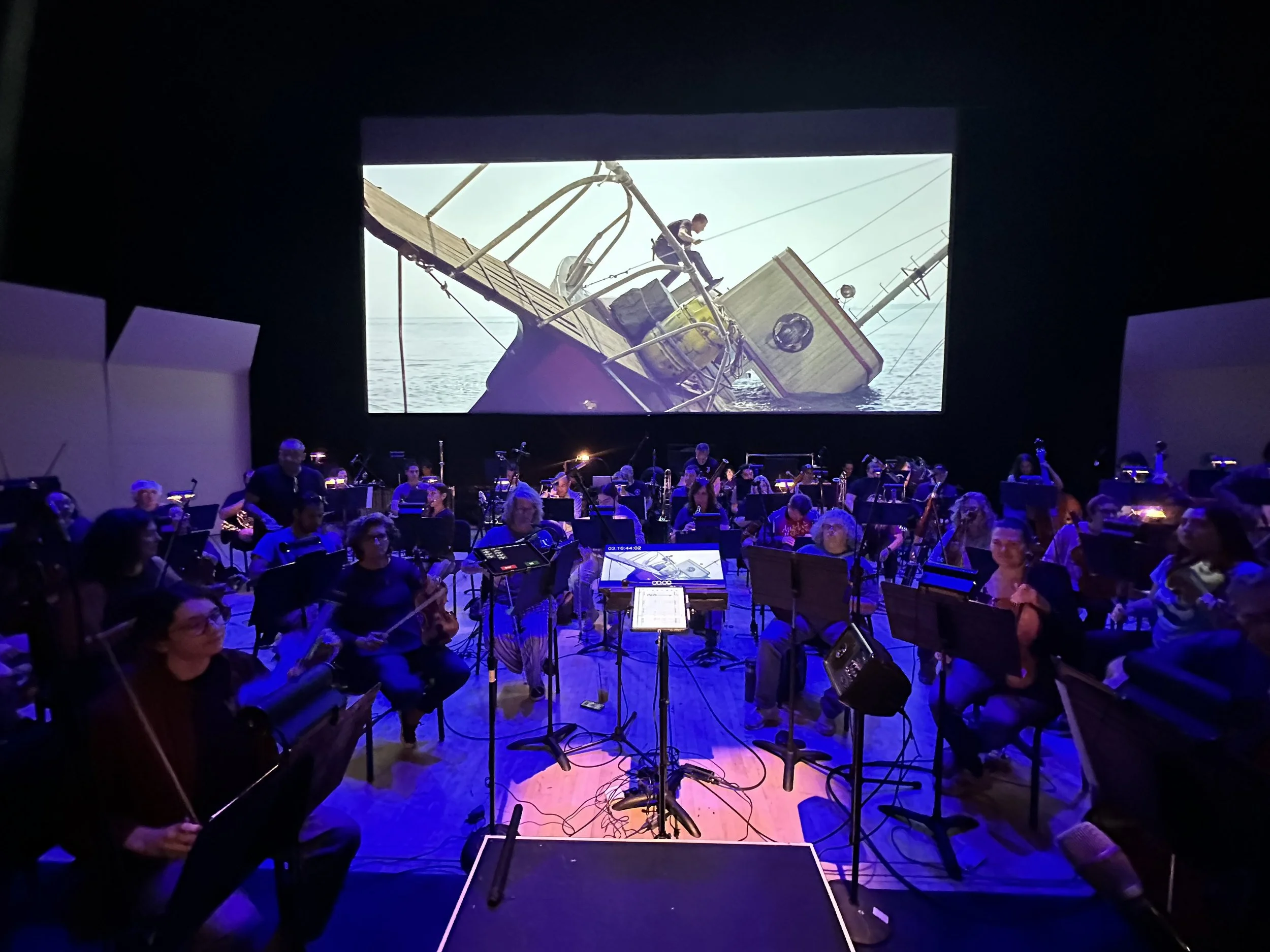
Then in October I paired John Williams with Shostakovich's Fifth Symphony — and the full depth of the connection came into focus. Shostakovich was among the most cinematic symphonic composers who ever lived, and Williams has spent his career in reverent conversation with composers exactly like him. You can hear it directly in Jaws — Stravinsky's Rite of Spring surging through the shark battle sequences, Debussy's La Mer shimmering in the open ocean passages, Prokofiev lurking beneath the surface. Williams didn't borrow these voices. He honored them, the way every great composer honors those who came before.
Standing on that podium in October, I felt the full arc of the year come into focus. From Holst to Eidelman to Williams to Shostakovich — all of it flowing through the same musicians, the same tradition, the same profound human impulse to tell stories through an orchestra.
The greatest film scores aren't separate from the classical tradition. They are the classical tradition — projected onto a screen, heard by millions, and opening the door to the orchestra for people who never knew they were waiting. My quest is to bring them through it — one score, one concert, one explosive moment at a time.